
Phage Journal | Pre-Winter Aquaculture Disease Prevention: How Bacteriophages Target and Resolve Recurrent Winter Vibrio Infections
— Moving Beyond Whack-a-Mole Chemical Disinfection · Restoring Aquatic Microecological Resilience
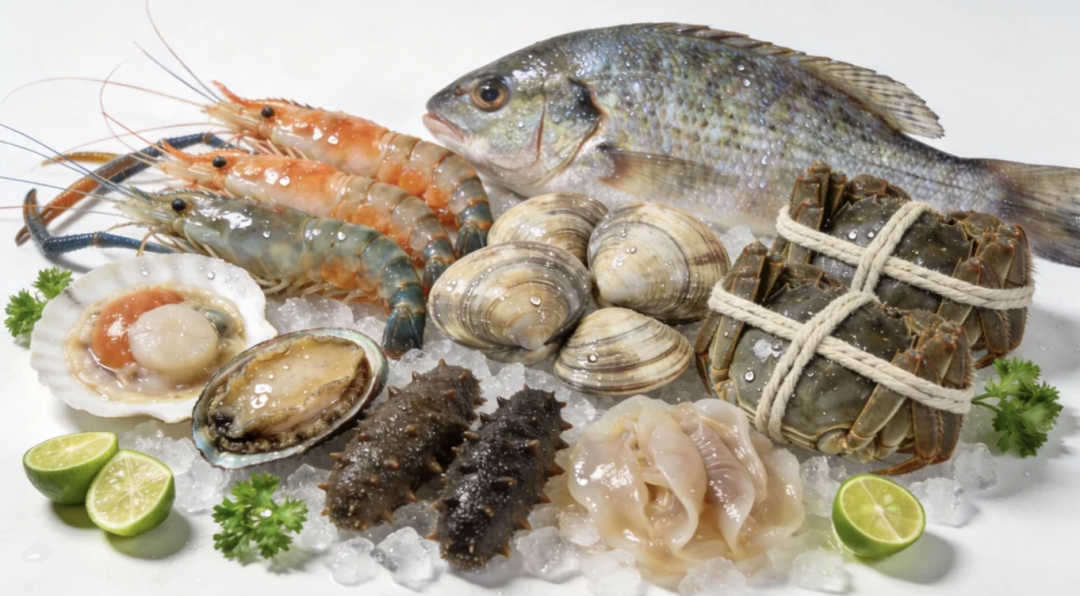
As autumn transitions into early winter, aquaculture operations across both temperate and tropical zones confront their most critical vulnerability window. From northern overwintering pond transfers to southern intensive coastal enclosures, sharp day-night temperature swings trigger vertical water turnover, benthic stress, and immunosuppression. Under these conditions, vibriosis (Vibrio disease) represents the most persistent and devastating bacterial challenge.
01 · Regional Winter Stressors: Why Chemical Disinfection Backfires
A pervasive misconception among farmers is that cooler water temperatures naturally suppress bacterial pathogens. In reality, acute seasonal transitions consistently precipitate shrimp mortality, grouper hemorrhagic ulcerations, and abalone pustule outbreaks. Frequent broad-spectrum chemical disinfection often creates a vicious cycle:
- Northern Hatcheries & Overwintering Ponds: Netting and pond consolidation operations cause mechanical abrasion on fish epidermis. Combined with sharp temperature declines (3–5°C drops in 24 hours) that suppress cellular immunity, secondary infections by opportunistic Vibrio and water molds rapidly escalate;
- Southern Intensive Facilities: Biomass loads and accumulated metabolic wastes reach their annual peak. Diurnal temperature variances of 8–10°C create severe thermocline inversion ("bottom turnover"), suspending benthic Vibrio reservoirs, ammonia, and nitrites into the entire water column.
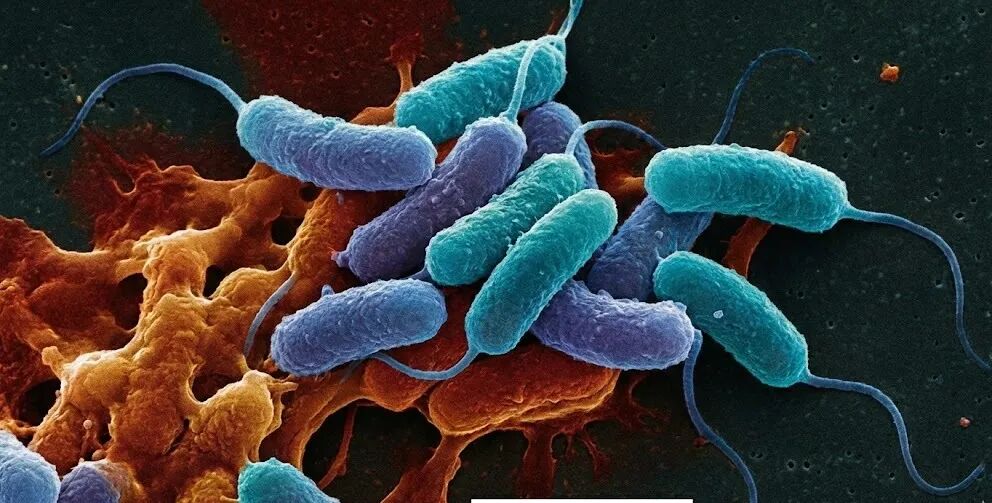 Seasonal thermocline turnover and physiological stress trigger recurrent opportunistic bacterial outbreaks
02 · Vibrio: The Opportunistic Aquatic Pathogen Behind Heavy Economic Tolls
Vibrio species are Gram-negative, facultatively anaerobic rod-shaped bacteria indigenous to marine and estuarine ecosystems. Common pathogenic taxa include Vibrio parahaemolyticus, Vibrio harveyi, Vibrio alginolyticus, Vibrio anguillarum, and Vibrio campbellii.
Their primary hazard stems from their opportunistic pathogenicity: present harmlessly at basal levels, they proliferate exponentially within hours when water parameters fluctuate or host immunity falters. They secrete hemolysins and metalloproteases that breach mucosal barriers, inducing septicemia and Acute Hepatopancreatic Necrosis Disease (AHPND).
Broad-spectrum chemical disinfectants and conventional antibiotics eradicate not only the pathogen, but also beneficial microalgae, Bacillus, and Lactobacillus populations. This leaves an "ecological vacuum". Because Vibrio bacteria possess rapid doubling times and biofilm-forming capabilities, they re-colonize the sterile niche ahead of beneficial flora, leading to worsening rebound frequencies.
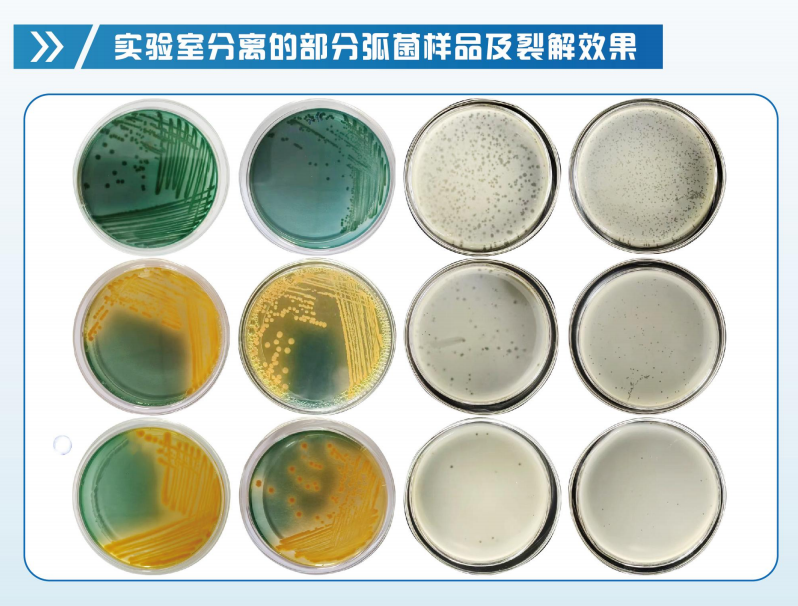 High receptor specificity enables bacteriophages to lyse target pathogenic Vibrio without disturbing non-target beneficial microflora
03 · Bacteriophages: Ecological Solutions to Ecological Dilemmas
Bacteriophages are naturally occurring biological viral entities that exclusively infect and lyse specific host bacteria. Unlike non-selective chemicals, phages exert strict receptor specificity: a Vibrio-targeting phage will not harm beneficial probiotic strains such as Bacillus subtilis or Lactobacillus, nor can it interact with eukaryotic host animal tissues.
Four Distinct Advantages of Phage Biocontrol in Aquaculture:
- Precision Targeting Without Ecological Disruption: Eliminates the "ecological vacuum" by preserving background probiotic microflora;
- Overcoming Drug Resistance: Operates through independent lytic enzymatic pathways, effectively eliminating multidrug-resistant (MDR) bacterial isolates;
- Autonomous In Situ Amplification: As long as target host bacteria are present, phages reproduce exponentially, providing sustained prophylactic defense;
- Zero Residues and Enhanced Food Safety: 100% biological origin, requiring no withdrawal periods and posing zero risk of chemical or heavy-metal bioaccumulation in commercial seafood.
 Connect with Us
Shandong New-Line Biotechnology Co., Ltd.
Dedicated to the industrialization of bacteriophage biocontrol solutions in agriculture and animal health. Equipped with 6 fermentation production lines and a repository of over 60,000 pathogenic bacterial strains.
Hotline: +86-536-2201616
Official Portals: phages.cn / phages.biz